
Hillsborough Commission Casts Final 5-2 Vote to Approve $2.3 Billion Rays Stadium
County commissioners locked in the last approval needed for a new Tampa Bay Rays ballpark on Hillsborough Community College's Dale Mabry campus, clearing the way for construction to start next month toward a 2029 opening.

Hillsborough County commissioners voted 5-2 on Friday to approve the final agreement for a new Tampa Bay Rays stadium, closing out the last governmental hurdle standing between the $2.3 billion project and a bulldozer. The vote came one day after Tampa City Council approved its own piece of the deal 4-3, and together the two votes clear the Rays to start bond validation and break ground next month.
The ballpark is planned for a 115-acre parcel on Hillsborough Community College's Dale Mabry campus, in the Drew Park area, and is targeted to open for the 2029 season. It's the outcome of months of negotiation that followed a conditional agreement commissioners passed in May, and it settles a question that has hung over the franchise's future in Tampa Bay for years.
Commission Chair Ken Hagan voted yes, along with commissioners Harry Cohen, Gwen Myers, Christine Miller and Chris Boles. Commissioners Donna Cameron Cepeda and Joshua Wostal voted no.
Who pays what
The $2.3 billion project splits funding three ways. The Rays are covering roughly $1.37 billion of the cost. The county's share is capped at $796 million, and the city is contributing $80 million toward infrastructure.
- County contribution: $796 million, including $360 million from the Community Investment Tax, $263 million in Tourist Development Tax-backed funding, $103 million from other county funds and $30 million in federal disaster-recovery money.
- City contribution: $80 million, funded through a new Community Development District collecting tax-increment revenue.
- Rays contribution: about $1.37 billion.
- Site: 115 acres of Hillsborough Community College's Dale Mabry campus.
- Target opening: 2029 season.
The county's final number came in $100 million lower than the figure in the memorandum of understanding commissioners approved back in May. City officials also renegotiated their side from that earlier framework, which had originally sought a bigger contribution from Tampa's part of the deal.
Around the stadium itself, a privately funded mixed-use development is planned, one that would generate tax-increment financing to help cover stadium infrastructure costs. Under the financing formula, the first $350 million in tax-increment revenue splits 30 percent to the development district and 70 percent to the city and county. Revenue between $351 million and $650 million splits evenly. Above $650 million, 85 percent goes to the district and only 15 percent stays with the city and county.
A split commission, a sharp exchange
The vote wasn't unanimous, and the debate before it showed why. Hagan framed the decision as a test of ambition for the county, telling fellow commissioners that a community willing to think big should treat the vote as an easy call. Cohen argued the region's standing as a market with three professional sports franchises was on the line.
That was Commissioner Wostal's objection, aimed specifically at the use of Community Investment Tax dollars, sales tax revenue voters approved in 2024 that he says was pitched to the public as money for community needs, not a ballpark. Cameron Cepeda joined him in voting no.
Rays managing partner Patrick Zalupski called Friday's vote "an extraordinary milestone, not simply for the Rays or for a ballpark, but for the future of Tampa and the entire Tampa Bay region." Rays CEO Ken Babby thanked Hagan and Hillsborough Community College president Ken Atwater, whose campus land makes the project possible. Tampa Mayor Jane Castor credited the commission for backing what she called an agreement that means jobs and investment for the region.
What happens next
With both governmental approvals in hand, the Rays can move into bond validation, the legal process that clears the financing structure before construction financing closes. Officials say shovels could be in the ground as soon as next month. Much of the surrounding site, including the future mixed-use development and a rebuilt Hillsborough Community College campus footprint, still has design and construction details to work out in the years ahead, and the county has not laid out a detailed public timeline beyond the 2029 opening target.
Residents along the Dale Mabry corridor can expect construction activity, traffic pattern changes and years of buildout as the project moves from paperwork to plywood. What the deal will look like on the ground, and how disruptive it gets before opening day, is the next chapter of a story that has already run for years.
Stay with Tampa Community Website for updates on the ballpark project and what it means for Tampa neighborhoods. Follow us on Facebook for breaking updates, and join the conversation in our Community Forum to share what you think the new stadium means for the city. For more on how local government decisions are shaping Tampa, read more government and politics stories or catch up on our latest news coverage.
Continue this story for free.
Stay informed about Tampa. Enter your email to access the full story and receive local news and community updates.
Free to read · No password to remember
New here? We’ll email you a sign-in link and code. Already a reader? Use your usual email.
Read next
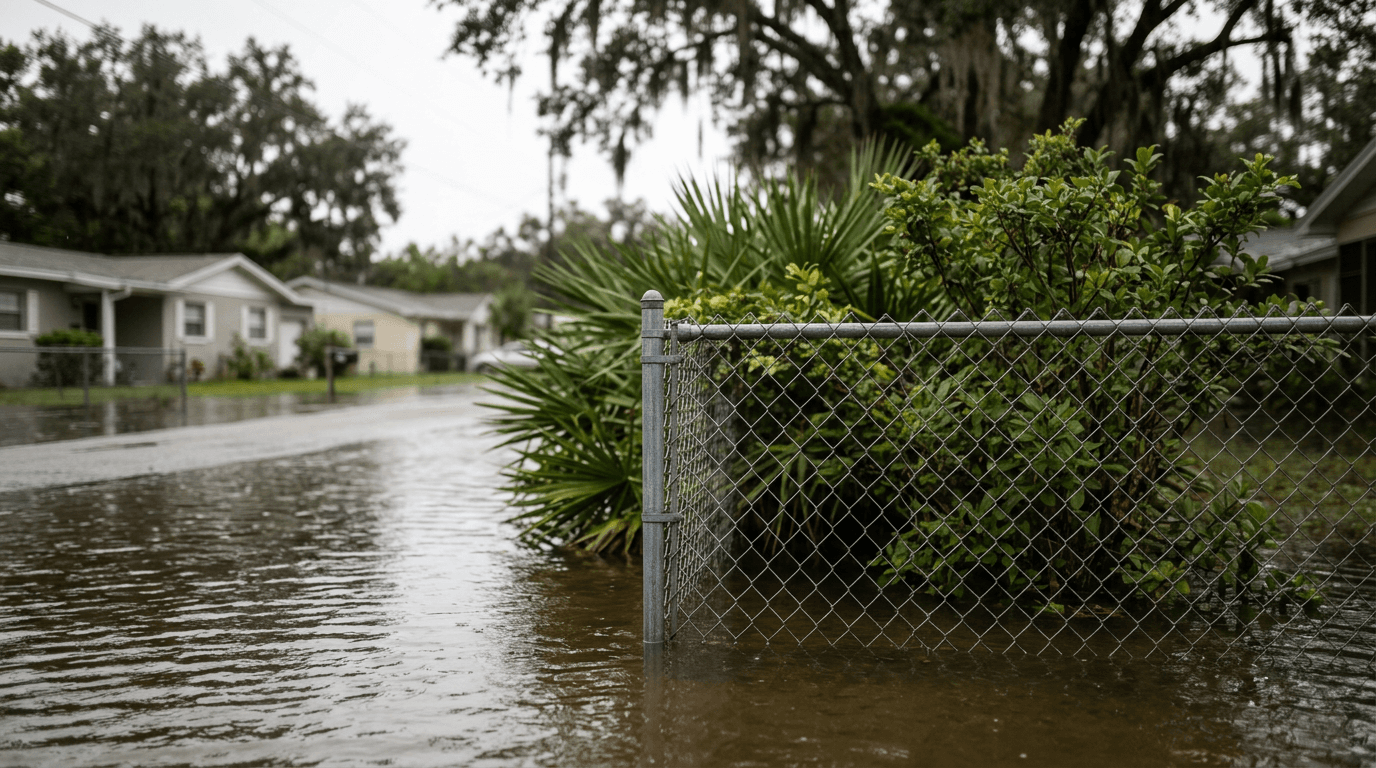
Tampa Council Votes Today on $93M Flood Fix for South Tampa — City Says There's No Backup Plan
Council members decide Thursday whether to approve a stormwater project routed through South Howard Avenue to end chronic flooding in Parkland Estates and Palma Ceia Pines, where officials say two to three feet of water regularly fills the streets.
Read the story ↗
Comments
Your draft stays here while you sign in. Be respectful and keep it local.
No comments yet.