

Hillsborough's $14.1 Billion Budget Comes Up Wednesday, With $367 Million Riding on November
Commissioners take up the FY27 spending plan at a 9 a.m. reconciliation meeting at County Center. Hanging over it: a county estimate that the statewide property tax amendment would strip about $367 million a year from Hillsborough.
Hillsborough County commissioners meet at 9 a.m. Wednesday, July 29, at County Center in downtown Tampa to reconcile the County Administrator's proposed $14.1 billion budget for the fiscal year that starts Oct. 1. It is the last working session before the September public hearings, and it lands with an unusual amount of doubt attached: county finance staff estimate Hillsborough would lose roughly $367 million a year in property tax revenue if Florida voters approve the property tax amendment on the November ballot. Parks, libraries, youth and aging programs, and nonprofit funding are all named in the county's own list of what could be cut.
Staff delivered the FY27 recommended budget to the board on July 15. The county says its guiding principles were to structure the budget to prepare for possible property tax reform, prioritize public safety, keep infrastructure and equipment maintained, hold current service levels, find savings, and invest in county employees. In plain terms, staff built a plan that assumes the money may not be there next year.
What the $367 million figure comes from
The number comes from a report by the county's Management and Budget Department, presented to commissioners in June by Chief Financial Administrator Tom Fessler. It was requested by Commissioner Chris Boles.
The measure headed to voters in November would raise the homestead exemption from $50,000 to $150,000 on Jan. 1, 2027, then to $250,000 on Jan. 1, 2028, for non-school levies. It also drops the annual assessment cap on non-homesteaded property, which covers apartment complexes, businesses, condo towers and vacant land, from 10% to 5%. It needs 60% of the vote to pass.
Fessler told the board that the Sheriff's Office and Fire Rescue received $1.3 billion in this year's budget, which is 88% of all property tax revenue the county collects. Under the amendment, according to the report, the county would take in about $1.13 billion. That is less than those two agencies alone cost today. Commissioner Harry Cohen noted that even cutting everything else would not close the gap.
Staff also drew a comparison to the last time collections collapsed. Property tax revenue fell about 29% during the Great Recession, the report said, and the state proposal would produce impacts that are similar but longer-lasting.
The options staff put on the table
None of these are decisions. They are the menu the report laid out, and several of them would show up on residents' bills rather than in a service cut:
- Spending down reserves to spread the hit over several years
- Hiring freezes, workforce reductions and pay freezes
- Reducing or eliminating funding for nonprofits
- Reducing or eliminating parks, aging, youth and other county services
- A new five-cent fuel tax and a 10% tax on utility bills
- A higher communications services tax, plus higher parking and building services fees
Library operations would probably still be funded, Fessler said, but there would be very little room left for renovations or new branches. He also raised the possibility of talking with the City of Tampa about whether the county keeps funding Community Redevelopment Areas, and said the legislation as written leaves real uncertainty about whether some services can be paid for with property tax dollars at all.
The board is not of one mind about any of it. Cohen said he was flabbergasted by the report and that the legislation would upend how governments in Florida are funded, noting it passed in Tallahassee in about a day with little debate. Boles said the proposal goes too far. Commissioner Joshua Wostal rejected that framing, describing the warnings as extreme hyperbole and telling residents to take the government's opinion with a large grain of salt and vote for their wallet.
How to be heard, and when
Wednesday's session is hybrid. You can speak in person in the 2nd Floor Boardroom or virtually, and the online sign-up form opened Monday at 9 a.m. and stays open until the meeting starts. Virtual speakers have to leave a phone number. In-person sign-up is available in the lobby, with staff on hand 30 minutes before the start. Written comments are accepted if you would rather not speak. Details and the sign-up link are on the county's budget hearing page.
| Date | What happens |
|---|---|
| Wed., July 29, 9 a.m. | Budget reconciliation meeting |
| Thu., Sept. 10, 6 p.m. | First budget public hearing |
| Thu., Sept. 24, 6 p.m. | Second hearing, final adoption vote, plus the capital program hearing |
The Sept. 24 hearing is the one that sets the numbers. The capital improvement hearing opens that evening, is paused immediately, then reopens once the budget hearing finishes, so anyone signed up for both should plan on a long night. The vote on the amendment itself comes in November, six weeks after FY27 has already begun, and the recommended budget documents are posted on the county's FY27 budget page. Meetings stream live on the county's YouTube channel and on HTV, Spectrum 637 and Frontier 22.
For more from County Center and City Hall, follow Tampa Community Website and our Facebook page, and tell us what you would protect first in our Community Forum. You can read more government and politics stories or catch up on the latest local news.
Header photo: Photo: Edgar C (Pexels)

Continue this story for free.
Stay informed about Tampa. Enter your email to access the full story and receive local news and community updates.
Free to read · No password to remember
New here? We’ll email you a sign-in link and code. Already a reader? Use your usual email.
Read next
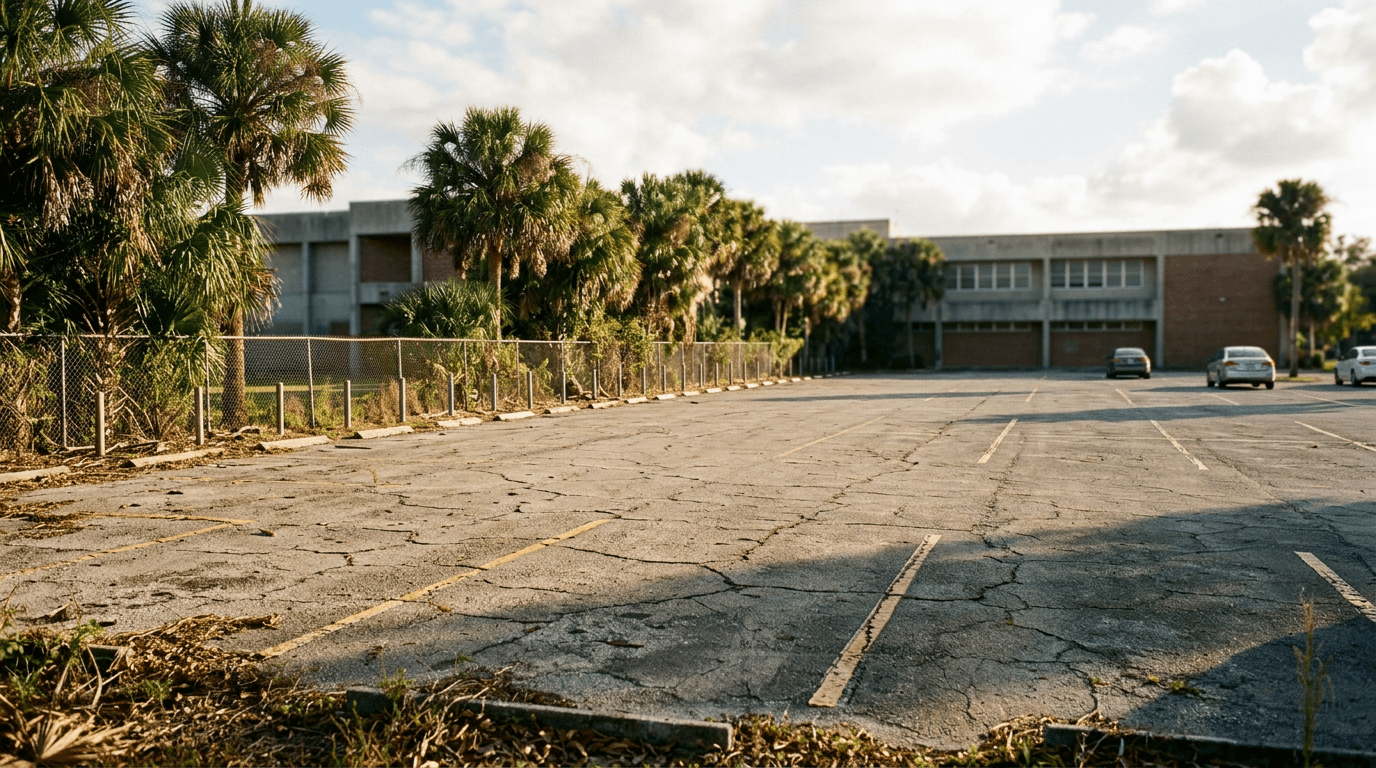
Rays Refile Land-Use Plan for 121-Acre Hillsborough College Site After Council's Historic 4-3 Block
The team submitted a new application Friday for the Dale Mabry campus site, weeks after Tampa City Council refused to send the first version to Tallahassee. At stake: what can legally be built on 121 acres of public land in Drew Park, and who pays for the infrastructure around it.
Read the story ↗
Stay connected with Tampa
Follow us for the latest community news and updates
Comments
What does this mean for your neighborhood? Share your experience or ask a question.
Your draft stays here while you sign in. Be respectful and keep it local.
No comments yet. Be the first to share your thoughts!