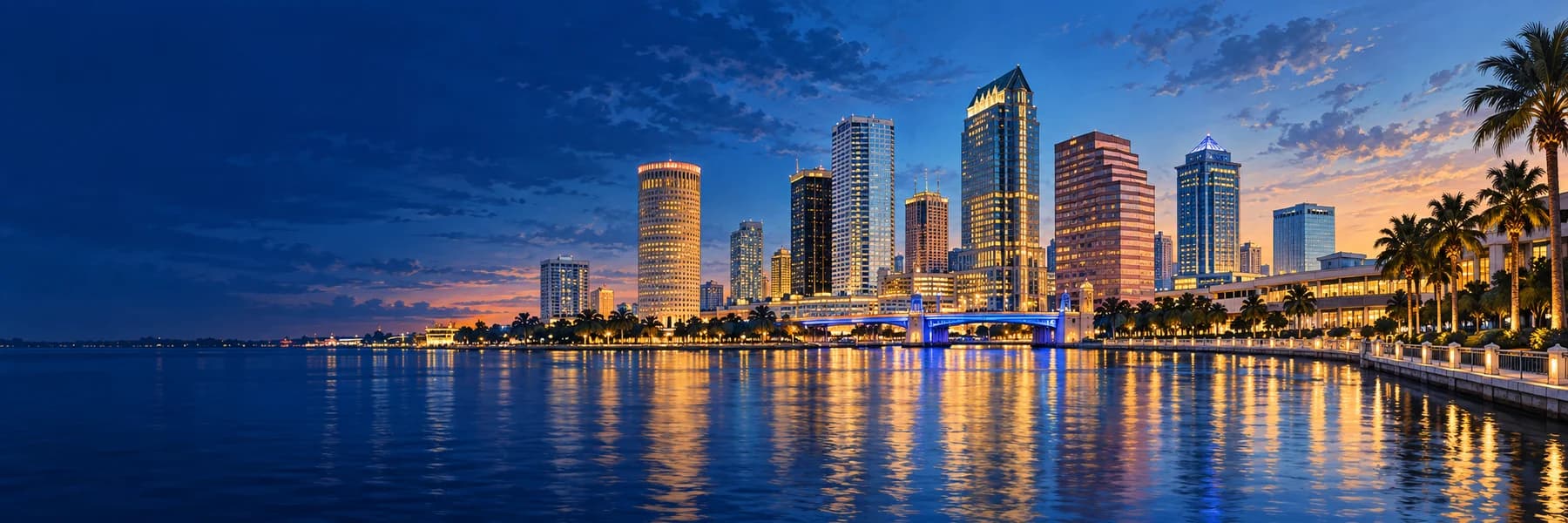

Rays Refile Land-Use Plan for 121-Acre Hillsborough College Site After Council's Historic 4-3 Block
The team submitted a new application Friday for the Dale Mabry campus site, weeks after Tampa City Council refused to send the first version to Tallahassee. At stake: what can legally be built on 121 acres of public land in Drew Park, and who pays for the infrastructure around it.

The Tampa Bay Rays filed a new land-use application Friday, Aug. 14, for the proposed ballpark site at Hillsborough College's Dale Mabry campus, restarting a process Tampa City Council shut down three weeks earlier. The filing matters well beyond baseball: it would rewrite what can legally be built on roughly 121.73 acres of publicly owned land in Drew Park, at the corner of two of the city's busiest corridors, and residents get their shot at the microphone at a public hearing expected in late September.
The land sits inside a rectangle most West Tampa drivers know by heart. N. Dale Mabry Highway on the east, W. Tampa Bay Boulevard on the south, N. Lois Avenue on the west, Dr. Martin Luther King Jr. Boulevard on the north.
What the amendment would actually do
The request would move the property out of the Public Semi-Public category, which is what you use for a college campus and government offices, and into Urban Mixed Use 60 and Regional Mixed Use 100. A city planning official told council that under those two designations, the site could be considered for a maximum of just over 11,900 dwelling units, or about 18.4 million square feet of residential, non-residential and mixed uses.
| Item | Detail |
|---|---|
| Size | About 121.73 acres |
| Now | Public Semi-Public |
| Proposed | Urban Mixed Use 60 and Regional Mixed Use 100 |
| Ceiling | Just over 11,900 homes, or roughly 18.4M sq ft |
| On the site today | Hillsborough College Dale Mabry campus, FDLE offices, Hillsborough Tax Collector |
The Hillsborough County City-County Planning Commission reviewed the earlier version and unanimously found it consistent with the Tampa Comprehensive Plan, pointing to mixed-use growth and transit investment in the West Shore Business Center. The amendment was publicly initiated at the request of the city's legal department and ran outside Tampa's normal four-cycle annual schedule.
Why the first try died
On July 23, council voted 4-3 against simply transmitting the amendment to state reviewers for their 30-day look, with Lynn Hurtak, Charles Miranda, Bill Carlson and Guido Maniscalco in the majority. Council Chair Alan Clendenin said afterward it was probably the first time in city history the body had refused to transmit a comprehensive plan amendment. The applicant's attorney had told members repeatedly that the vote was procedural, not the substance, and that the real hearing would come in late September.
That argument did not land. Hurtak said the density changes would be permanent even if the stadium never gets built, and that she saw no point sending something to Tallahassee she intended to vote against anyway. She also questioned why the more intense RMU-100 category was being sought when nearby property has not developed anywhere near that scale. Both she and Carlson have complained that council has been shut out of the negotiations, which the mayor's office has handled for the city.
The same night, acting as the city's redevelopment agency, council pulled a scheduled Aug. 20 vote on using $100 million in future Drew Park CRA property taxes for stadium construction. Carlson noted at the time that it can be put back on a future agenda.
The money is moving too
On Aug. 12, Carlson went public with a different structure for the city's share of the $2.3 billion project. He wants a tax increment financing district drawn around the whole development, not just the ballpark, capturing property taxes from hotels, offices, apartments and even private space inside the stadium. Revenue would be split three ways: the city, Hillsborough County and a community development district.
Under his version, the $180 million the May memorandum of understanding sought from Tampa goes away. Instead the city would advance $20 million a year for four years, $80 million total, to the CDD for infrastructure, and be repaid out of the district's share of property-tax growth. Carlson says the change removes his main objection to the May deal, though his final vote depends on the definitive agreements.
The percentages have not been released, and that is the sticking point. Without the CDD's cut, council members cannot calculate how much Tampa gets back or how long the wait would be. Hurtak has been blunt that she wants to know where the $20 million a year comes from before she votes. Clendenin, who backed the May framework, says he can support Carlson's mechanism because it reaches the same place.
The clock
Rays CEO Ken Babby said in July that public financing has to be settled in August to keep an April 2029 opening on track, and that the project can proceed without any money from Tampa. The county has approved a nonbinding commitment of $796 million. The team has pledged more than $1.2 billion. The lease at Tropicana Field runs out after the 2028 season.
Carlson has said his plan could reach council at a late-August meeting, and local reporting has pointed to Aug. 27 as the practical deadline to hold the construction schedule. If council does transmit the refiled amendment, state agencies get their 30 days and the adoption hearing, the one where public comment actually decides something, lands in late September. Nothing has been scheduled yet.
Follow the rest of this story with us at Tampa Community Website, and on Facebook. Got a view on 11,900 homes at Dale Mabry and MLK? Join the conversation in our Community Forum. For more on City Hall and county decisions, read our government and politics stories and our business development coverage.
---END---
Continue this story for free.
Stay informed about Tampa. Enter your email to access the full story and receive local news and community updates.
Free to read · No password to remember
New here? We’ll email you a sign-in link and code. Already a reader? Use your usual email.
Read next
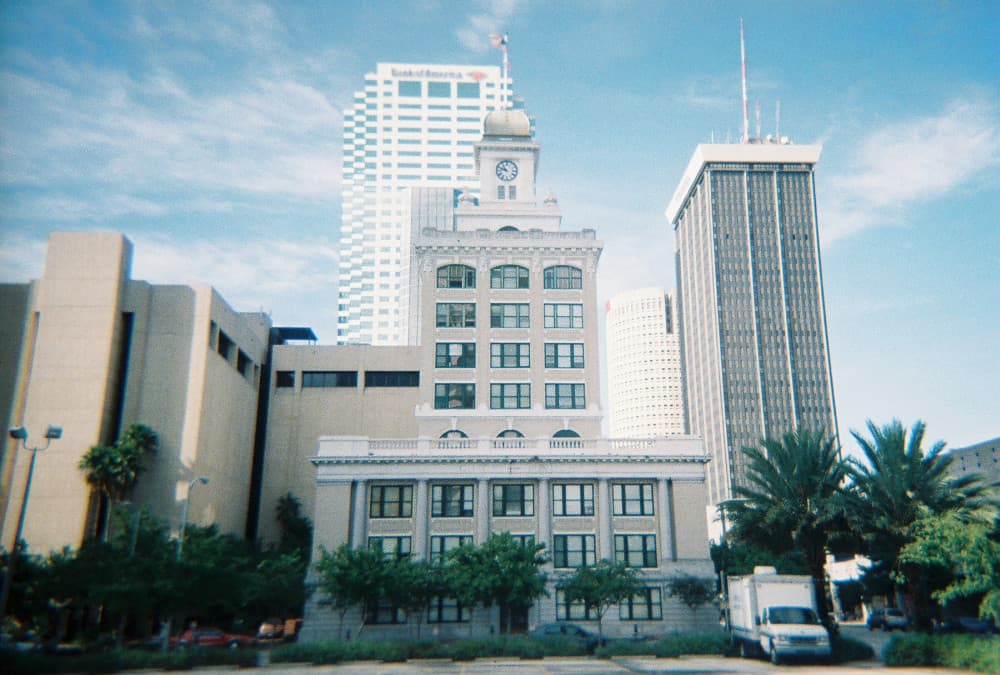
Tampa Council Takes First Votes Thursday on Charter Changes Headed to March 2027 Ballot
Council meets at Old City Hall Thursday with a 1:30 p.m. vote on charter amendments that could reshape city government and land on Tampa ballots in under five months.
Read the story ↗
Comments
Your draft stays here while you sign in. Be respectful and keep it local.
No comments yet.