

What DeSantis’ Property Tax Proposal Would Mean for the Average Tampa Home
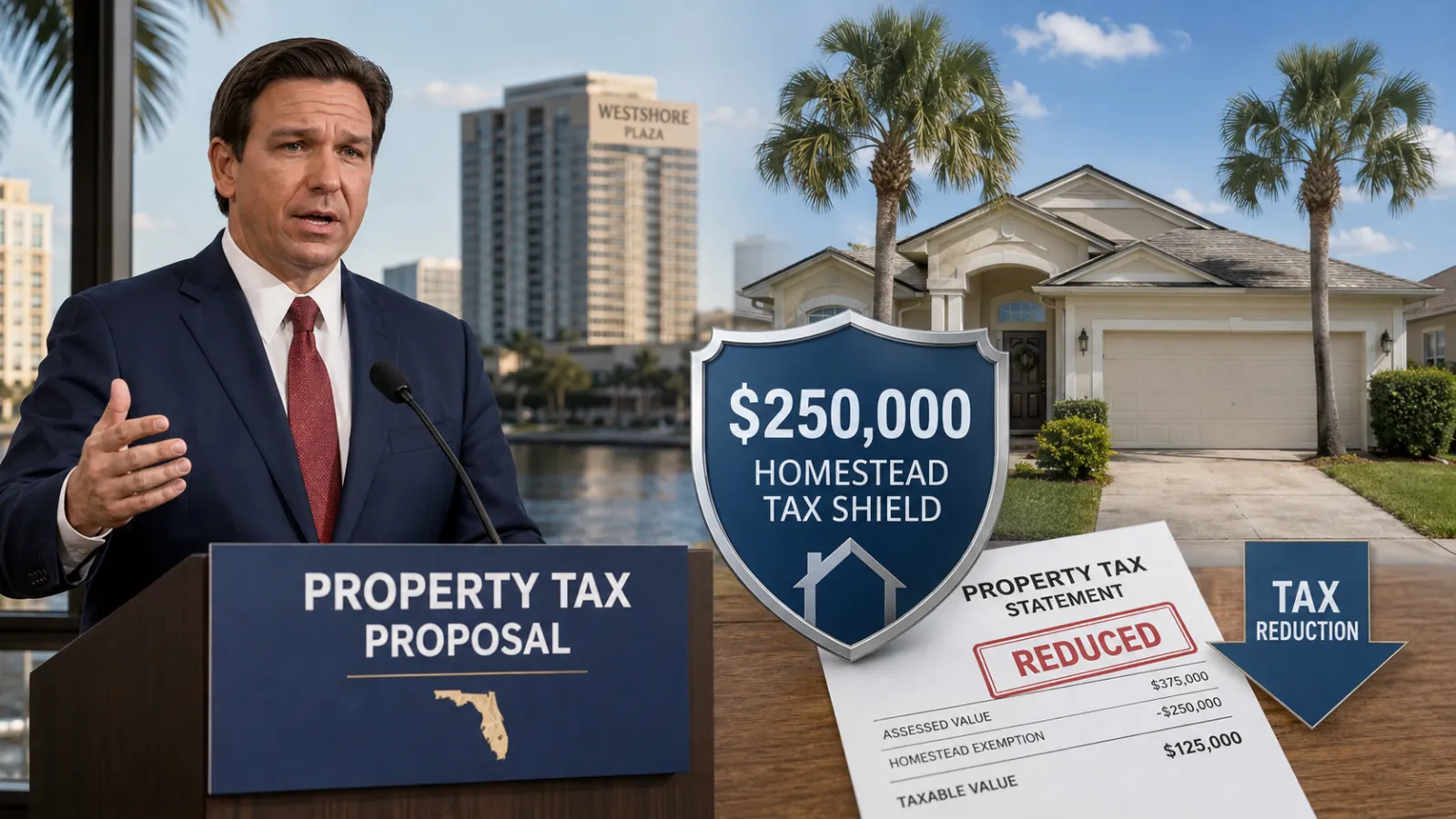
Gov. Ron DeSantis stood in Tampa on May 27 to unveil a plan that could wipe out property taxes on most Florida homes — a proposal that would put thousands of dollars back in local homeowners’ pockets while raising hard questions about how Tampa pays for its police officers and firefighters.
Speaking at a hotel near Tampa International Airport in the Westshore district, the governor laid out a constitutional amendment he wants voters to decide in November. The plan, branded “Save Our Homes from Excessive Property Taxes,” would immediately shield the first $250,000 of a homesteaded property’s value from taxation and direct lawmakers to draw up a schedule to eliminate homestead property taxes entirely over time.
To force the issue, DeSantis called a three-day special legislative session in Tallahassee beginning Monday, June 1. For the measure to reach the November ballot, it needs approval from three-fifths of both the Florida House and Senate. After that, 60 percent of voters statewide would have to say yes for it to become part of the state constitution.
What the plan actually does
Today, a Florida homeowner who lives in their home and files for the homestead exemption shields roughly $51,411 of assessed value from taxation under current law. DeSantis wants to push that figure to $250,000 in one step.
The governor said the higher exemption would eliminate property taxes for about 60 percent of homesteaded properties statewide right away. If lawmakers later raise the threshold to $500,000, he estimated roughly 92 percent of homesteaded properties would owe nothing.
The plan carries several conditions beyond the headline number. According to information released by the governor’s office, the proposal includes five core pieces:
- Homestead exemption: Exempts the first $250,000 of a homesteaded home’s value, with a future schedule to phase out homestead taxes entirely.
- Core services only: Whatever property tax revenue remains could be spent only on public safety, schools, infrastructure, and natural resources.
- Business protection: Caps future tax assessment growth on small businesses, lowering the annual valuation increase limit from 10 percent to 5 percent.
- Residency rule: Anyone who becomes a Florida resident after Jan. 1, 2027, would have to wait up to five years before qualifying for the larger exemption.
- State trust fund: A new state-funded grant program would help local governments — especially smaller, rural ones — keep paying for essential services.
What the plan does not do
Despite the sweeping language, the proposal is narrower than the full property-tax elimination DeSantis has floated for more than a year. It targets only homesteaded properties — the homes Floridians actually live in. Vacation homes, rental properties, and commercial real estate would stay on the tax rolls.
It also does not take effect on its own. Even if lawmakers approve it during the special session, nothing changes unless 60 percent of Florida voters back it in November. Lawmakers have until August to finalize the ballot language.
Importantly, the plan does not spell out a new revenue source to replace what local governments would lose. DeSantis has rejected the idea of raising sales taxes or other levies to offset the cut, arguing the state already collects enough and that local spending has grown too fast.
DeSantis chose Tampa as the backdrop for this announcement, and the city sits squarely in the crosshairs of the debate. Every dollar of the City of Tampa’s property tax revenue currently funds police and fire services. A dramatic cut would force city leaders to find that money elsewhere or scale back — making this far more than an abstract statewide policy question for local residents.
What it could mean for a typical Tampa home
Tampa property owners pay one of the higher combined millage rates in Hillsborough County. For 2026, a homesteaded property inside the city limits carries a combined rate of roughly 19.84 mills, blending levies from the City of Tampa, Hillsborough County, the school district, and smaller special districts. One mill equals $1 in tax for every $1,000 of taxable value.
Here is how the math shakes out for two common Tampa scenarios, based on a review of public tax data. These are illustrative estimates; an individual bill depends on the exact parcel, taxing districts, and the Save Our Homes assessment cap.
| Scenario | Current annual tax | Under the plan | Estimated savings |
|---|---|---|---|
| Home valued at ~$376,000 (city average) | ~$6,440 | ~$2,500 | ~$3,940 |
| Home valued at ~$451,000 (recent median sale) | ~$7,930 | ~$3,990 | ~$3,940 |
| Home valued at or below $250,000 | ~$3,950 | $0 | Full bill eliminated |
The pattern is straightforward: shielding the first $250,000 of value removes a large, fixed chunk from the taxable base. For a modest home, that can erase the bill entirely. For a higher-value home, the savings still land in the same range because the exemption caps out at $250,000 — the homeowner keeps paying on whatever value sits above that line.
It is worth noting that a slice of every Tampa tax bill goes to school millage, which the broader debate has flagged as a sticking point. Some earlier proposals carved out protections for schools and law enforcement; the governor’s current resolution does not include those specific carve-outs, meaning schools and first responders could end up competing for whatever revenue remains.
What it would do to Tampa’s budget
This is where local concern is sharpest. According to the City of Tampa’s adopted budget, the city collects roughly $380 million in property tax revenue — and for the second consecutive year, every dollar of it is dedicated to police and fire services. Total public safety spending in the budget exceeds $455 million, meaning property taxes do not even fully cover what the city spends keeping residents safe.
That math is exactly what local officials point to when they warn about the plan. If a large share of homesteaded homes stops paying property taxes, the revenue that currently underwrites police and fire would shrink — even though the proposal restricts remaining dollars to those same core services.
Tampa Mayor Jane Castor responded directly to the announcement, cautioning that the city’s most basic functions could be exposed. According to remarks she made at a news conference, the cost of funding Tampa’s police and fire departments already exceeds what the city brings in through property taxes, and she warned that significant changes to that revenue could put a wide range of services at risk.
The governor’s answer to that worry is the proposed state trust fund, which would distribute grants to help local governments absorb the loss. Critics counter that grant programs can be unpredictable from year to year and may not fully replace a dedicated local revenue stream, particularly for communities that lean heavily on property taxes.
Why there are concerns beyond Tampa
Statewide, the numbers behind the debate are large. DeSantis noted that property tax collections by Florida local governments have nearly doubled in seven years, climbing from about $32 billion to roughly $60 billion, and are projected to reach $83 billion by 2032. He frames that growth as runaway spending; local leaders frame much of it as the cost of serving a fast-growing state.
Earlier estimates give a sense of the scale of revenue at stake. When the Florida House advanced a related proposal to phase out non-school homestead taxes, the state’s Revenue Estimating Conference projected an initial hit to local governments of about $4.4 billion, growing to $13.3 billion a year. A separate House measure to eliminate non-school homestead taxes outright was projected to cut local revenue by roughly $14 billion in its first year.
Organizations including the Florida League of Cities and the Florida Association of Counties have raised serious concerns about earlier versions of property-tax elimination, describing them as state intrusion into local budgeting. Smaller and rural counties, which have thinner commercial tax bases and fewer alternative revenue sources, have warned they could be hit hardest by a one-size-fits-all approach.
Supporters argue homeowners deserve relief from rising tax bills driven largely by climbing property valuations, and that local governments can trim spending. Opponents argue the cost of police, fire, schools, and infrastructure does not disappear when the tax does — it simply shifts to businesses, renters, and state coffers, or shows up as reduced services. Tampa, with its rapid growth and hurricane-related infrastructure demands, sits at the center of that trade-off.
What happens next
The special session opens Monday in Tallahassee and is expected to run through June 3. The legislation will move through Senate committees first, and lawmakers have until August to settle on final ballot language. Early signals from legislative leaders have been mixed: Senate President Ben Albritton voiced support, while House Speaker Daniel Perez offered a more measured response, noting the plan was not shared with legislative leaders before the public announcement.
For Tampa residents, the practical takeaway is that nothing changes immediately. If the measure clears the Legislature and reaches the ballot, the decision will land with voters in November — and the outcome would reshape both household budgets and the city’s finances for years to come.
Tampa Community will continue tracking the special session and what it means for local homeowners, neighborhoods, and city services. For more local news and updates, visit tampa-community.com.

Continue this story for free.
Stay informed about Tampa. Enter your email to access the full story and receive local news and community updates.
Free to read · No password to remember
New here? We’ll email you a sign-in link and code. Already a reader? Use your usual email.
Read next
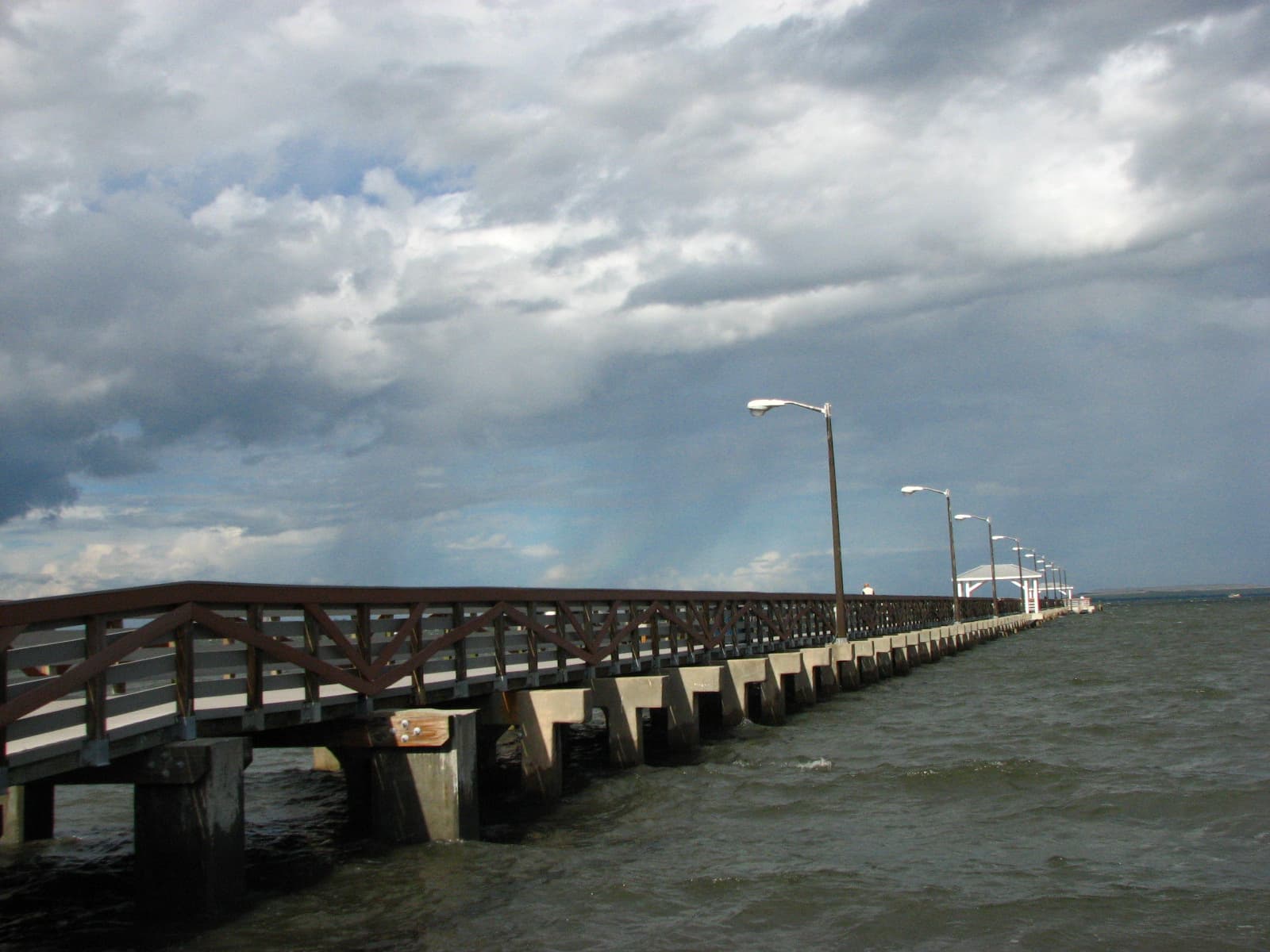
Tampa Begins $1.7 Million Design Push to Rebuild Ballast Point Pier After Helene
Nearly two years after Hurricane Helene tore the pier apart, Tampa is hiring an engineering firm to design a hurricane-resistant replacement for the 940-foot South Tampa landmark.
Read the story ↗
Comments
What does this mean for your neighborhood? Share your experience or ask a question.
Your draft stays here while you sign in. Be respectful and keep it local.
No comments yet. Be the first to share your thoughts!