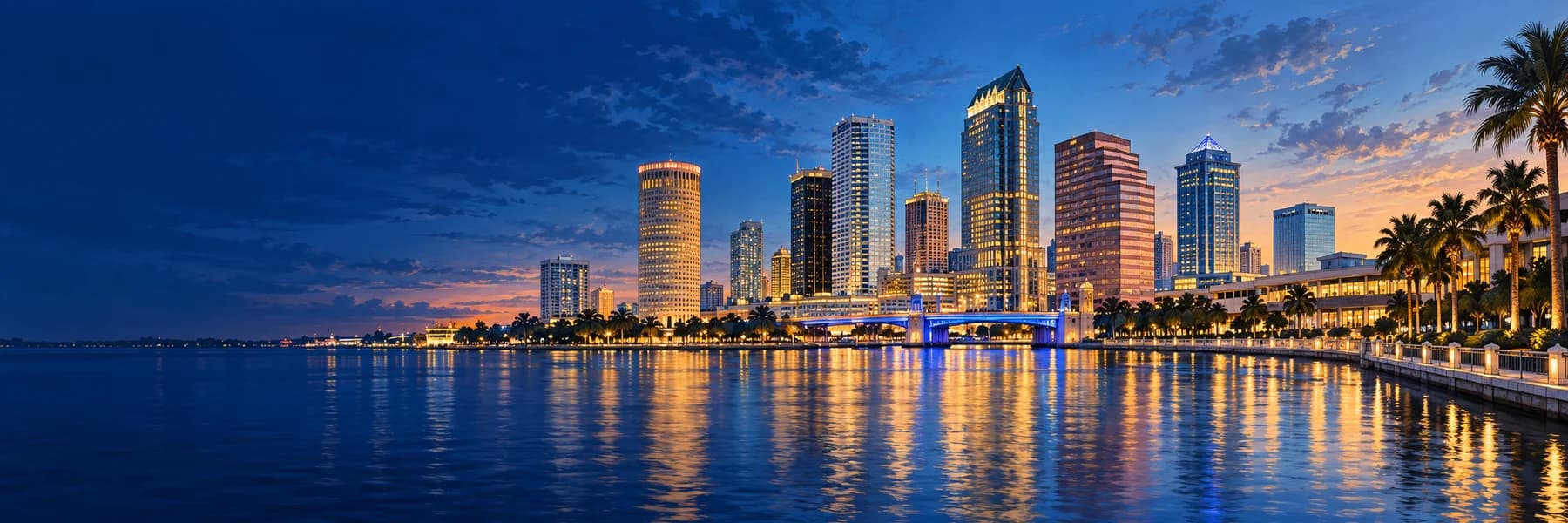

Property Tax Vote in November Throws Tampa's $2.3 Billion Rays Stadium Deal Into Doubt
Tampa and Hillsborough leaders are getting cold feet on the proposed Rays ballpark near Raymond James Stadium as a November property-tax amendment threatens the revenue meant to help pay for it. The city's redevelopment board just pushed a key vote to August.
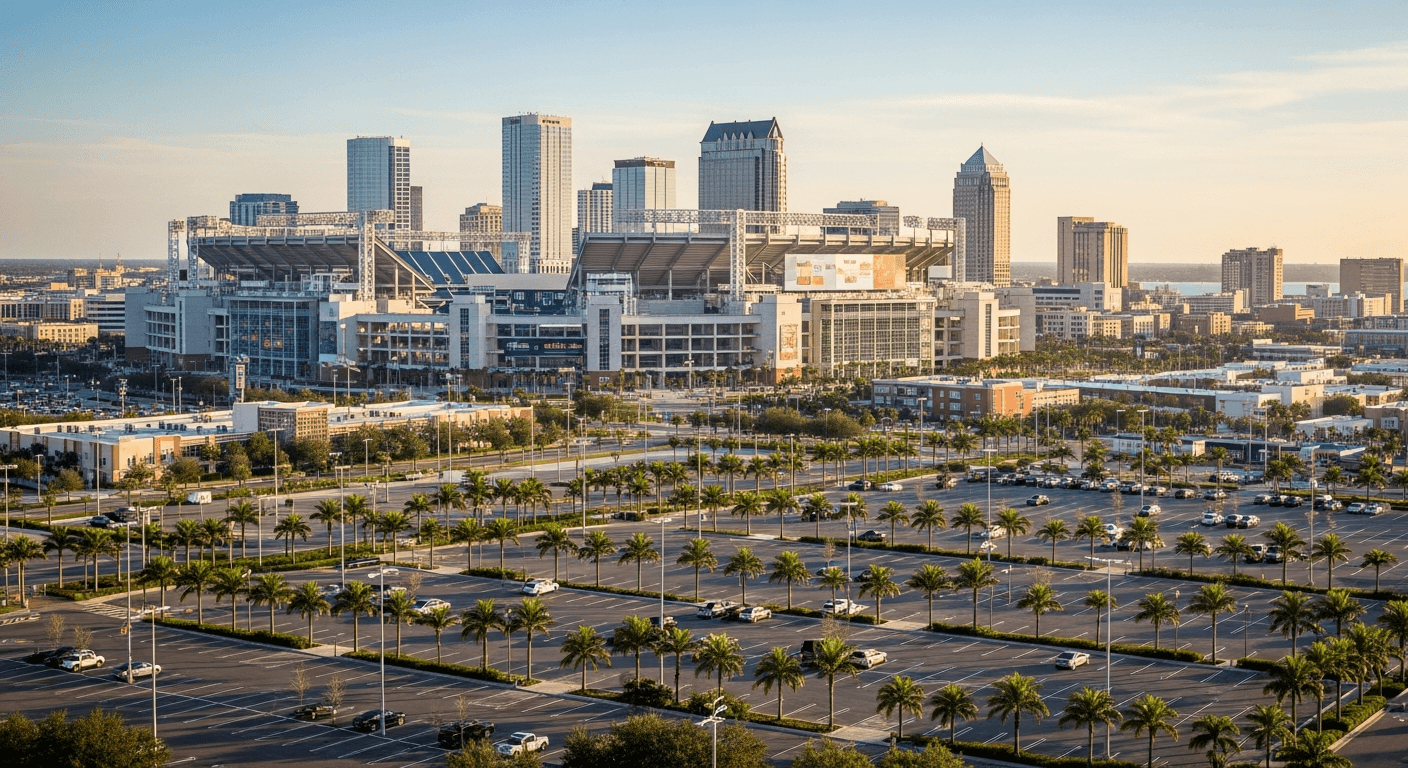
The long-running quest to build the Tampa Bay Rays a new ballpark in Tampa has hit a fresh and very local snag: a statewide property-tax measure headed to the November ballot. With the prospect of sharply lower property-tax collections looming, both Tampa and Hillsborough County leaders are slowing down — and a key city vote that was expected this month has now been pushed to August.
For residents, the stakes are concrete. The Rays are seeking roughly $1 billion in local public money toward a $2.3 billion, 31,000-seat stadium proposed across from Raymond James Stadium on the Hillsborough College Dale Mabry campus. That's public money tied to the same tax base that funds police, firefighters, schools and road work — exactly the budget officials now fear is about to shrink.
- The proposed ballpark is a $2.3 billion, 31,000-seat venue near Raymond James Stadium on the Hillsborough College Dale Mabry campus.
- The Rays are asking Hillsborough County and the City of Tampa for about $1 billion in public funding.
- Tampa's Community Redevelopment Agency board voted 5-2 to delay a key funding vote until August, citing "recent developments in Tallahassee."
- A November statewide property-tax amendment could cut local revenue — and the city's contribution leans on roughly $100 million backed by redevelopment-area property taxes.
What changed in Tallahassee
For months, momentum had been building. Earlier in the spring, both the Tampa City Council and the Hillsborough County Commission signed off on a nonbinding memorandum of understanding with the Rays — the council approved it on a narrow 4-3 vote, according to DRaysBay. The next step was supposed to be a routine vote authorizing the Community Redevelopment Agency's participation.
Then the Legislature, meeting in a June special session, advanced a constitutional amendment — a priority of Gov. Ron DeSantis — that would significantly expand homestead exemptions and cap how fast business property taxes can rise. The measure now goes to voters on Nov. 3, where it needs 60% approval to pass.
That single development reframed the entire conversation. When Tampa's council members — sitting as the Community Redevelopment Agency board — met on June 11, they voted 5-2 to push the vote to August, citing the uncertainty out of Tallahassee. Some members pressed to delay it even longer.
Why property taxes matter to the deal
Two big problems flow from the amendment. The first is dollars. Tampa's piece of the stadium financing includes about $100 million backed by anticipated Community Redevelopment Area revenue — money that's generated when property values, and the taxes on them, climb above a baseline. Negotiators had assumed the stadium and surrounding development would supercharge that growth.
If the amendment passes, those projections likely have to be revised downward: a much larger homestead exemption could wipe out tax payments from some lower-value homes, while a proposed 5% cap on annual business-property assessment increases would slow the revenue growth the city was counting on to cover its debt.
The estimated hit to local budgets is not small. Per analyses cited in reporting on the measure, Hillsborough County could lose somewhere between $320 million (Florida Policy Institute estimate) and $560 million (the county's own estimate) a year, while the City of Tampa estimates a loss of about $78 million annually.
| Government | Estimated annual property-tax loss |
|---|---|
| Hillsborough County (county estimate) | ~$560 million |
| Hillsborough County (Florida Policy Institute estimate) | ~$320 million |
| City of Tampa | ~$78 million |
The second problem is the law itself. As reported, the amendment would require local governments to spend property-tax dollars only on "core public needs" — public safety, education, infrastructure and natural resources. A pro sports stadium doesn't obviously fit that list, raising an open legal question about whether redevelopment-area property taxes could be used for a ballpark at all. The legislation doesn't address it.
Worth watching: Even if the financial impact on the stadium proves modest, officials face a tough political reality — committing public dollars to a ballpark while potentially cutting services after a tax-revenue drop would be a hard sell to residents.
The county was already nervous about another tax
Property taxes aren't the only sore spot. Much of the county's share leaned on the Community Investment Tax, a half-cent sales tax voters renewed in November 2024 — a tax that most commissioners had said back then should not go toward a stadium. The county's own documents have acknowledged that paying for the project would be harder than first thought, especially after the state eliminated the sales tax on commercial leases.
That left officials, in the words of the county's chief financial administrator at a recent workshop, looking "in the couch cushions" — eyeing economic-development reserves, building-maintenance funds and rainy-day money that largely comes from property taxes, according to the Tampa Bay Times. Those are the same reserves the county would lean on after a hurricane or an economic downturn.
What the stadium would actually be
Behind the financing fight is an ambitious vision. An AECOM analysis prepared for the Tampa Sports Authority projects the venue would host far more than 81 Rays home games — including roughly eight concerts, dozens of festival days, soccer friendlies and college football, plus community events like performances by The Florida Orchestra. The broader stadium district has been pitched at around 130 acres with millions of square feet of apartments, offices, retail, hotels and entertainment over three decades.
The same analysis offered some sober notes: even at a projected 20,500 fans per game, the Rays would still rank in the bottom third of MLB attendance, and any opening-years bump would likely fade after a three-year "honeymoon" unless the team wins consistently.
What happens next
For now, the stadium agreement remains nonbinding, and nothing is finalized. Tampa's redevelopment board is set to revisit the funding question in August, while on the county side, commissioners including Chris Boles — who had voted for the MOU — have asked for more detail on the ballot measure's fiscal impact before moving ahead. The real reckoning, though, may not come until after November, when voters decide the amendment that's now hanging over the whole plan.
No final commitment has been made, and the deal's fate is now tied to a tax vote every Hillsborough homeowner will weigh in on this fall. Watch for the August redevelopment-agency meeting and the November ballot.
Stay with Tampa Community Website as this story develops, and share your take — would you support public money for a new Rays ballpark? Join the conversation in our Community Forum. Follow us on Facebook, Instagram and X for updates as the August vote nears.
For more on how local decisions affect your wallet and your neighborhood, read more government & politics stories and keep up with the latest local news.
Continue this story for free.
Stay informed about Tampa. Enter your email to access the full story and receive local news and community updates.
Free to read · No password to remember
New here? We’ll email you a sign-in link and code. Already a reader? Use your usual email.
Read next
Tampa Board Pulls Rays Stadium Vote Off the Calendar — And the CEO Says the Team May Not Need the City's Money
Tampa's redevelopment board voted 5-2 to strip the Rays ballpark item from its Aug. 20 agenda, the second delay in six weeks. The team's CEO now says he isn't counting on a city vote at all.
Read the story ↗
Comments
What does this mean for your neighborhood? Share your experience or ask a question.
Your draft stays here while you sign in. Be respectful and keep it local.
No comments yet. Be the first to share your thoughts!